
Clothing Fabric Selection Guide
Compare polyester mesh, stretch nylon, cotton-blend jersey and recycled-content fabrics, separating visible structure from measured performance.
Clothing Fabric Selection Guide
4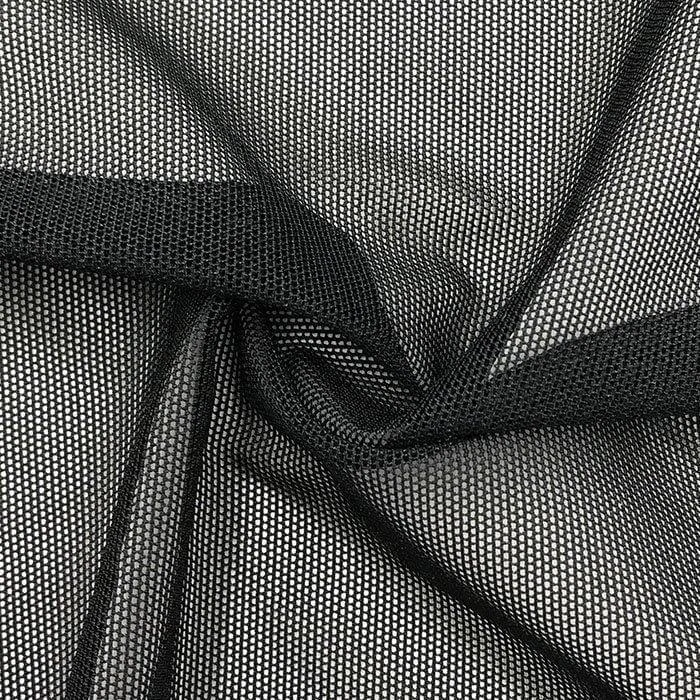
Performance polyester
Polyester-based fabrics combine fibre, construction and finishing for different uses. Polyester has low intrinsic moisture absorption, while wicking, drying and air flow also depend on yarn, pores and finishing. What to compare in the image The reference is a polyester mesh with regular openings and visible background. Compare its open structure with the fine nylon surface and cotton knit loops; mesh is only one polyester construction. Properties and limitations Compare weight, openness, skin contact and coverage under stretch. Wicking, drying and UV claims need results for the actual fabric and test conditions. External visual reference, not a factory sample. Image source: Sportek .
Running tops, sports singlets and ventilation panels
Stretch nylon
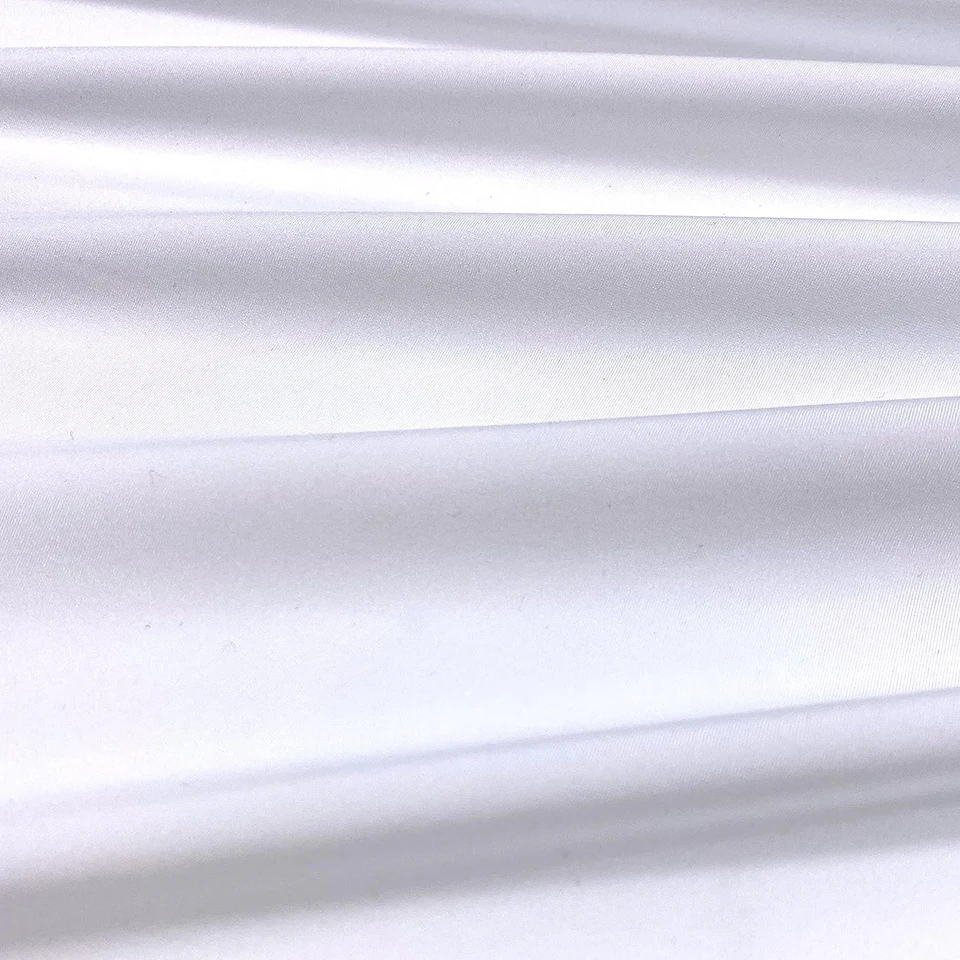
Nylon is commonly combined with elastane, or engineered through its construction, to provide stretch. Fibre blend, construction and weight together affect hand-feel and support. What to compare in the image The reference has a fine, smooth surface, contrasting with open mesh and visible cotton knit loops. Smooth appearance does not establish stretch direction or recovery performance. Properties and limitations Distinguish extension from recovery. Compare lengthwise and crosswise stretch, coverage under tension, pilling and seam behaviour; assess distortion after movement in fitted garments. External visual reference, not a factory sample. Image source: Ice Fabrics .
Leggings, fitted active tops and suitable swimwear
Cotton-blend jersey
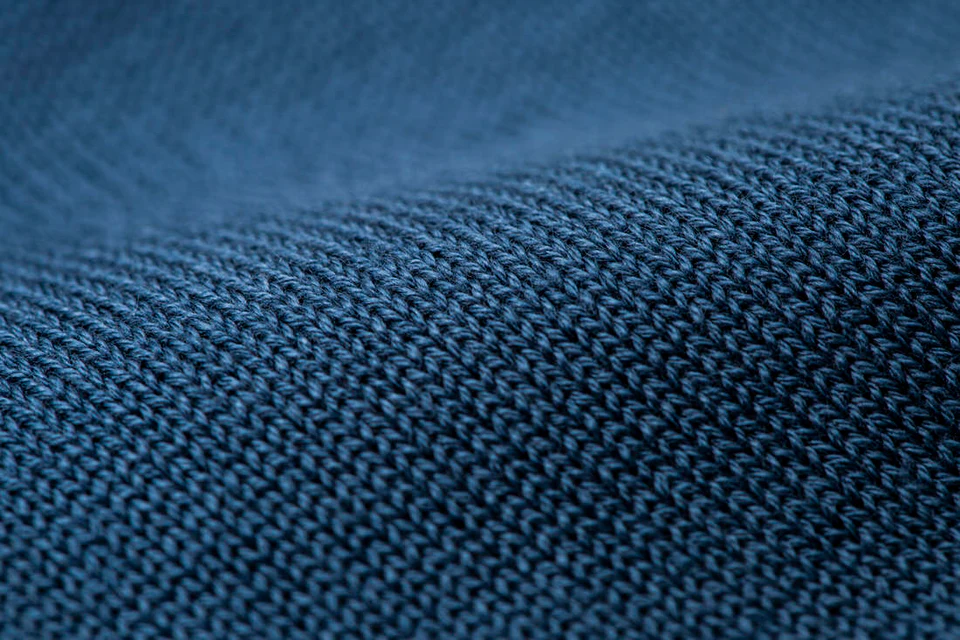
Cotton-containing yarn forms interlocking knit loops; other fibres can modify strength, stability or stretch. Single jersey commonly has V-shaped loops on its face and a different reverse texture. What to compare in the image The close-up emphasises cotton knit loops and yarn texture. Loop outlines are more apparent than on the fine nylon example; plain jersey does not rely on the pronounced openings of mesh. Properties and limitations The photograph illustrates knit structure, not a fixed blend. Confirm cotton content, yarn specification and weight; compare shrinkage, twisting, pilling and neckline recovery. External visual reference, not a factory sample. Image source: CLOTHET .
T-shirts, everyday tops and athleisure
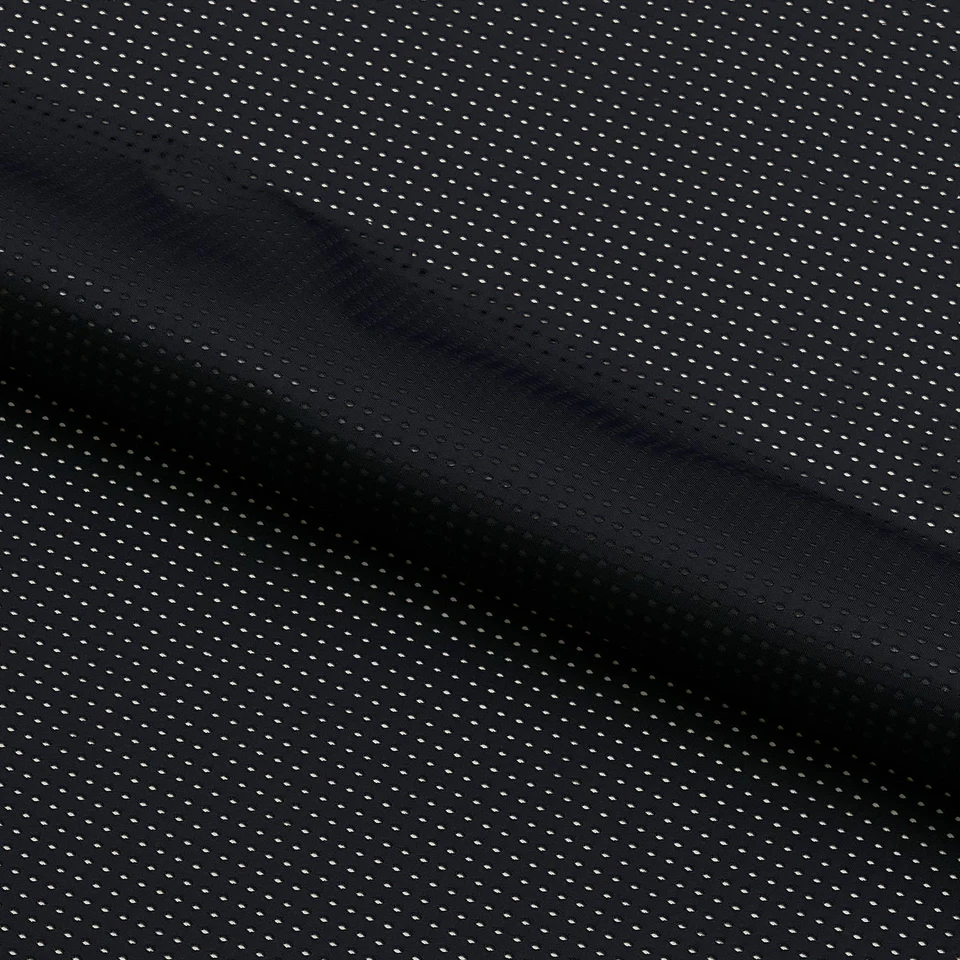
Recycled performance fabric
Recycled describes the source of the fibre, such as recycled polyester or nylon. Performance comes from fibre, construction and finishing; these are separate specification dimensions. What to compare in the image The source identifies this example as a recycled-nylon mesh. It illustrates openings, not a universal recycled texture: recycled fabrics can also be smooth or have other constructions. Properties and limitations Compare like fibre, weight and structure before evaluating recycled content and supporting traceability documents. Recycled content alone does not establish breathability, durability or certification. External visual reference, not a factory sample. Image source: Blue Moon Fabrics .
Sportswear and casual clothing with specified recycled content
Build a material brief that can be checked
Separate fibre content, fabric construction and finish. Compare swatches at similar weights under the same lighting, and check drape, stretch and recovery for the intended garment.
- Specify fibre percentages, construction, GSM, usable width and colour references.
- Review shrinkage, colourfastness, pilling or other tests relevant to the end use.
- Request applicable evidence before using recycled-content, UV-protection or performance claims.
Reference photographs show structure and appearance; they cannot establish test results. Review decoration compatibility on the selected fabric and confirm the material during sampling. Send your fabric requirements with a garment reference.