Garment production workshop · Humen, Dongguan
No. 30, Longyan Industrial Road, Humen, Dongguan, Guangdong, China
Use the published workshop images and video to review visible material preparation, equipment and garment sewing in Humen, Dongguan. For your style, confirm the current production location, applicable operations and any specialist partners before placing an order.
Visible processes: material preparation · cutting and printing equipment · garment sewing
Fabric selection
Choose fabric composition, weight, stretch and color to match the garment and intended use. Confirm material availability and sample approval before bulk production.
Process Selection
Coordinate digital textile printing, cutting and sewing with the approved artwork and construction requirements. Confirm the process on a sample before production.
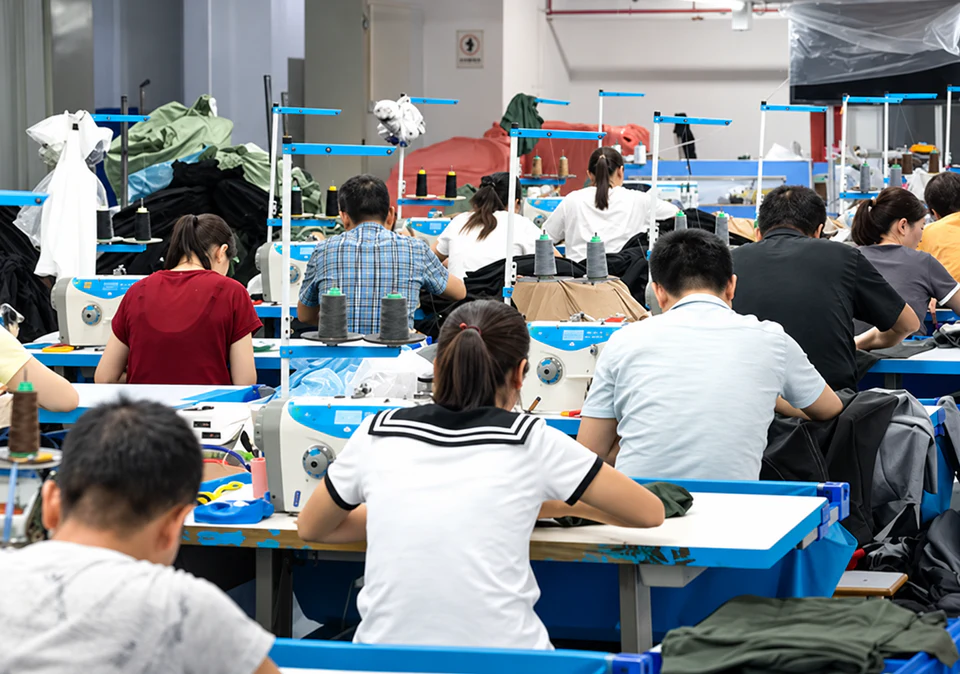
- Industrial sewing machines and sewing stations
Used to join cut panels and assemble garments, including shoulder, side and sleeve seams for tops, or panel and waistband assembly for trousers. Stitch types and attachments depend on the approved sample.
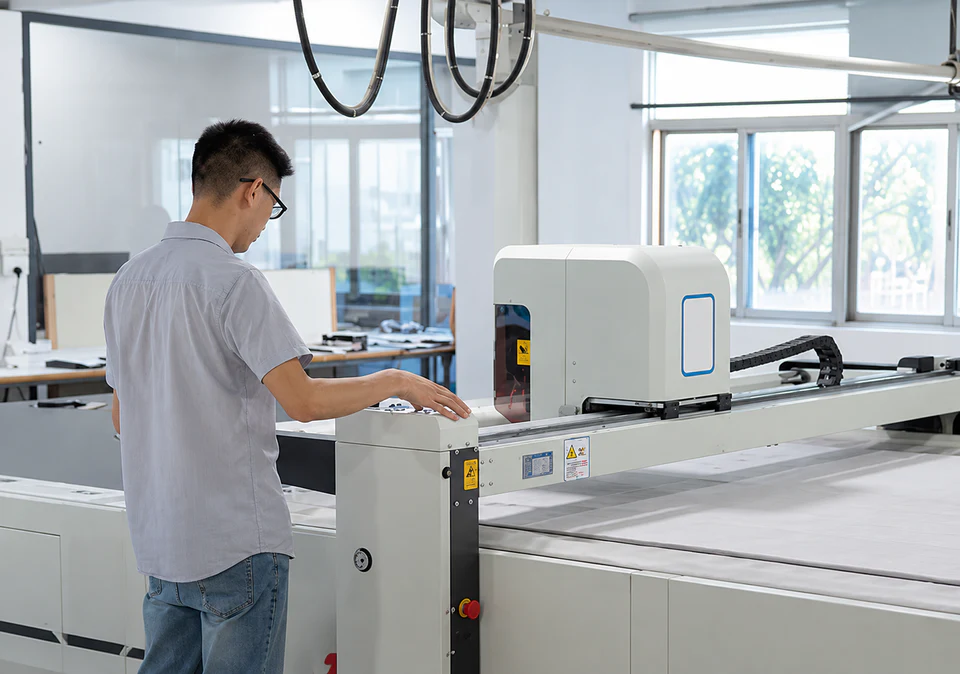
- Cutting equipment and worktables
Used to prepare body, sleeve or trouser panels from the pattern. Confirm size patterns, panel direction and print alignment before cutting.
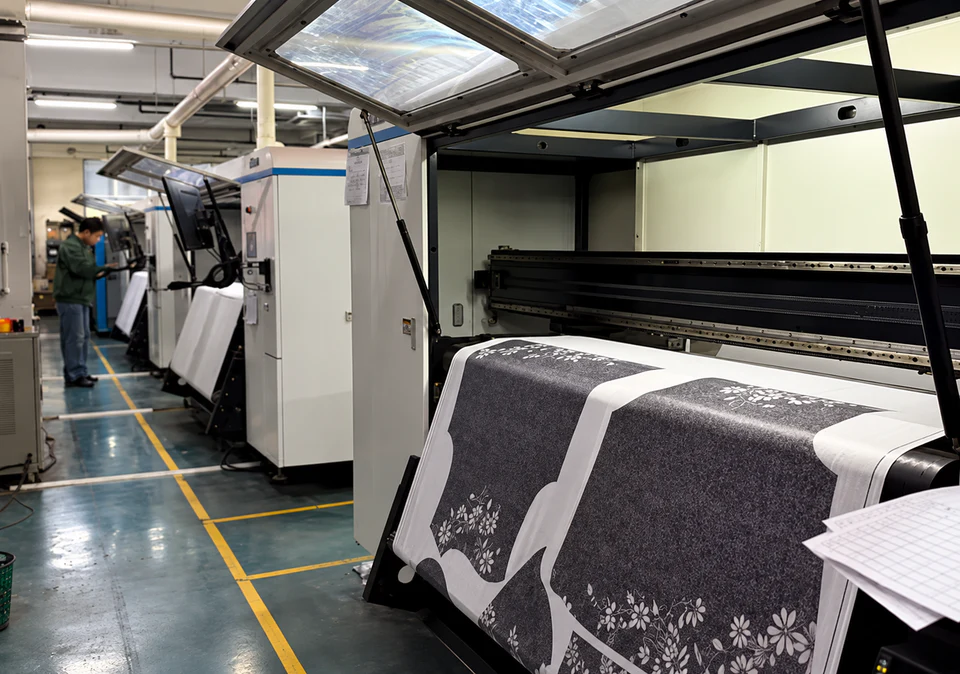
- Textile printing equipment
Used to produce graphics on fabric or panels. Artwork, dimensions, placement and fabric compatibility need checking; approve the colour result on a sample print.
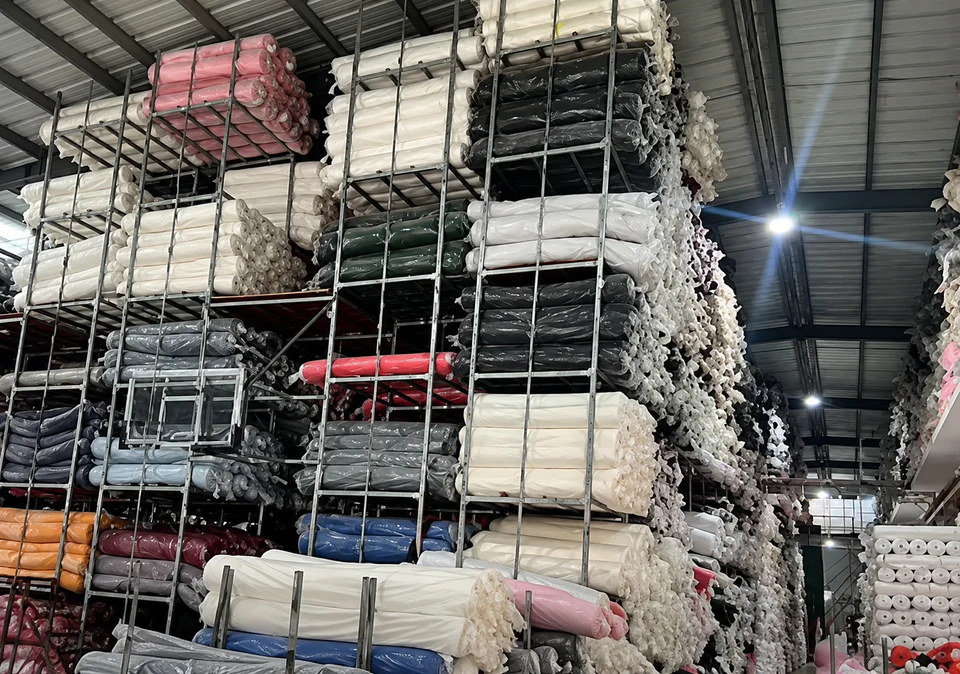
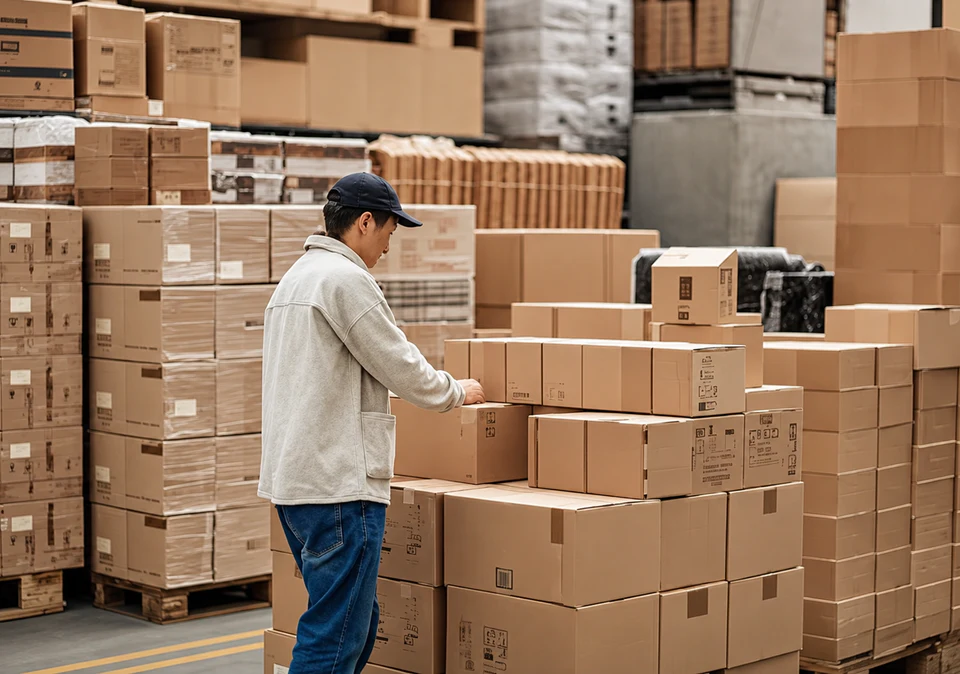
- Fabric storage racks and handling areas
Used to store rolls, prepare batches and move materials between stages. Match fabric composition, weight, colour and batch when preparing materials.
Equipment configuration and production arrangements are confirmed for each order.
Manufacturing capability
From sample sewing to production-line coordination, manufacturing follows the approved fit, construction and order requirements.
- Prepare materials: check composition, weight, colour and batch against the order quantity.
- Prepare patterns and panels: cut to the confirmed size specification, checking panel quantities, direction and matching.
- Apply graphics: approve a sample print for styles requiring decoration. Whether printing precedes or follows sewing depends on the garment.
- Sew and assemble: follow the approved sample and check key stitches, seams and dimensions.
- Finish and pack: check appearance, sizes, labels and quantities against the order before folding, individual packing and cartoning.
Supply Chain
Plan material sourcing, packaging and shipment preparation together. Confirm packaging, labels, quantities and delivery arrangements for each order.
Quality Control
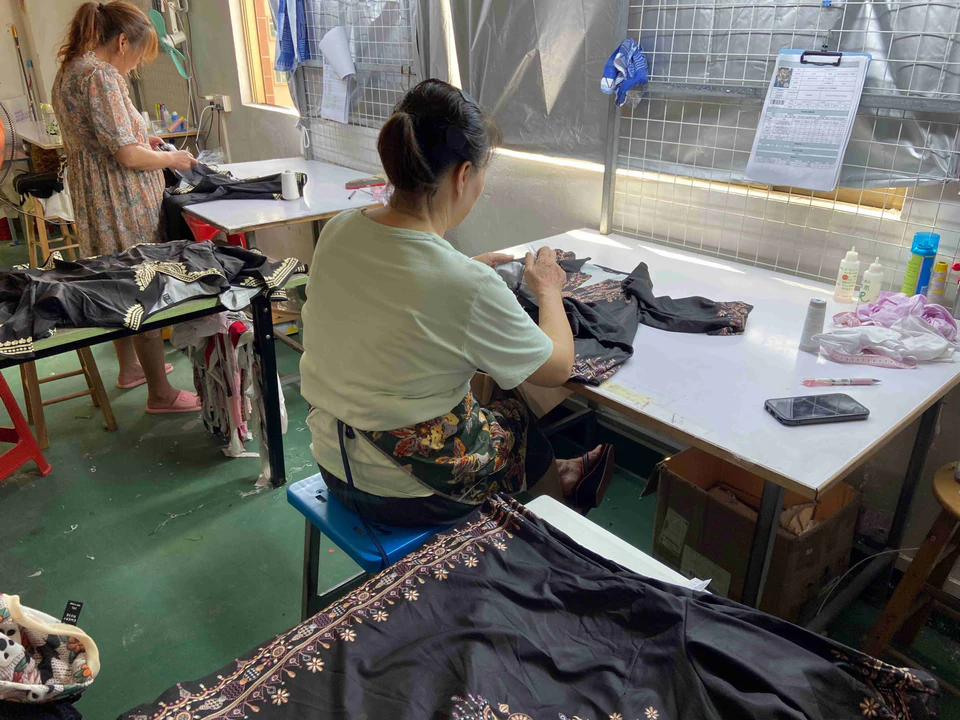
Review garment appearance, construction and finishing against the approved sample and order requirements before release.
The worktable photograph shows garment handling and manual checking. Inspection points and acceptance requirements are agreed for each order.
More factory views
Explore the equipment and working areas behind garment development. Cutting, printing and sewing are coordinated according to the confirmed production plan.
- Training tops, singlets and sports shorts: review stretch fabric, movement allowance, seams and graphic placement.
- T-shirts, hoodies and sweatpants: confirm fabric weight, fit, cuffs, waistbands and pocket construction.
- Polos and casual sports tops: review collars, plackets, dimensional stability and finishing details.
Use the current product catalogue as a reference. New fabrics, constructions and specialist processes need sample assessment. Define testing, third-party inspection and packing requirements before production.
Factory location
No. 30, Longyan Industrial Road, Humen, Dongguan, Guangdong, China