Compare garment finishes
Compare ink layers, raised surfaces, stitches, pile and washed textures, with the mechanism and limitations of each technique.
Printing
4Graphics formed with ink: compare solid colours, multicolour detail and raised puff effects.
- Printing
Screen printing
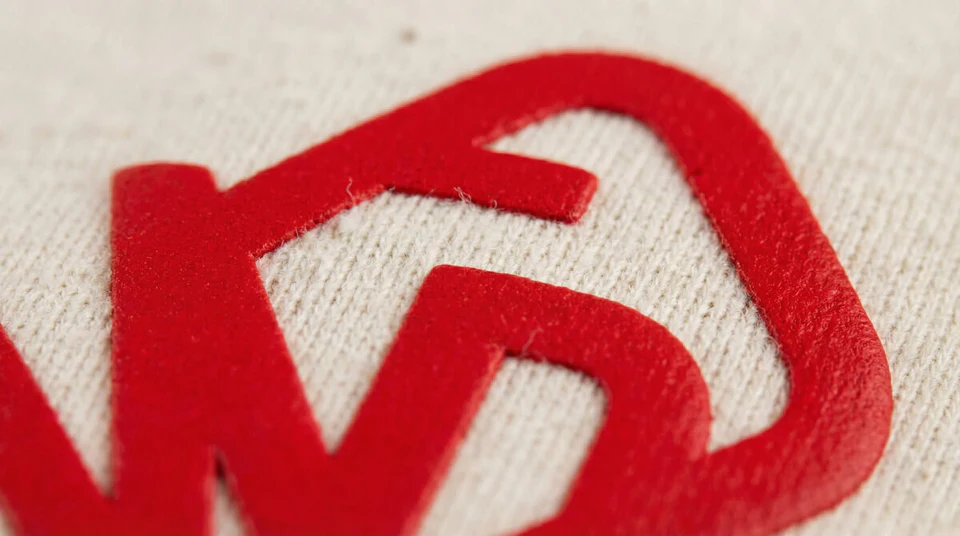
Ink passes through a stencil mesh onto the textile. Multicolour artwork generally uses separated screens with registered colour layers. What to compare in the image The close-up shows a red ink layer meeting the knitted base. Conventional screen printing does not aim for the pronounced relief of puff printing; solid colours and defined edges are useful comparison points. Properties and limitations Hand-feel varies with ink, coverage and curing. Halftones can reproduce shading, but detail, registration and washed appearance need assessment on the actual print. External visual reference, not a factory sample. Image source: TAEDA .
ApplicableDetailsLettering and solid graphics on T-shirts, sweatshirts and teamwear
 Printing
Digital printing
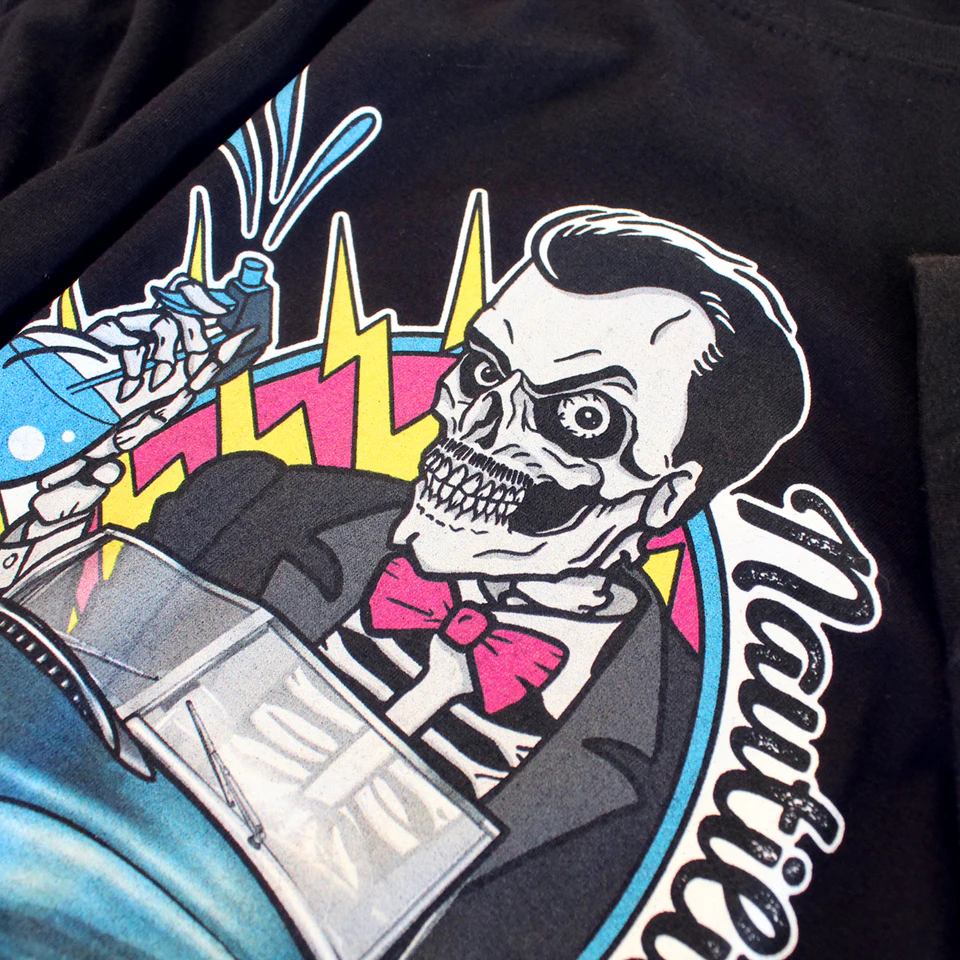
Digital files control inkjet output for multicolour, shaded and detailed artwork. DTG is one digital route; direct-to-fabric and transfer routes have different material requirements. What to compare in the image This garment illustration is an example of digital output. Compare colour transitions, fine lines and tonal detail. Digital printing and DTG are overlapping terms, not mutually exclusive technologies. Properties and limitations Fibre composition determines compatible inks, pretreatment and fixation. Digital printing does not imply compatibility with every fabric or a particular colourfastness grade. External visual reference, not a factory sample. Image source: Teefactory .
ApplicableDetailsMulticolour illustrations, gradients and repeat patterns
 Printing
Puff printing
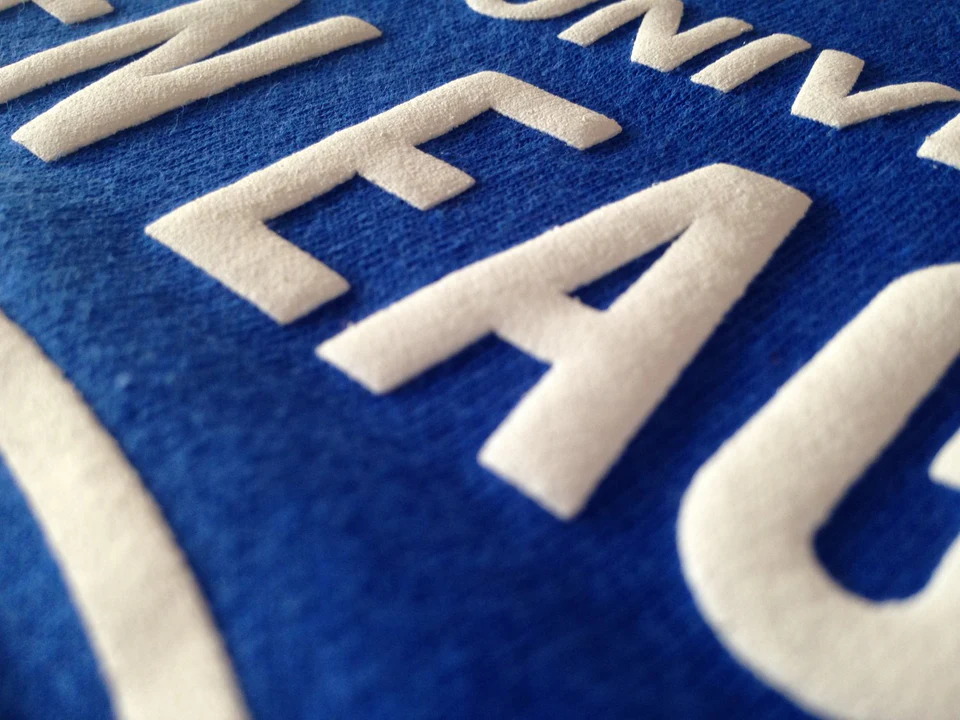
A puff additive expands during heating, raising the printed layer above the cloth. The relief comes from the ink layer rather than embroidery thread. What to compare in the image The angled close-up reveals letter thickness, a fine granular surface and shadows. Compared with conventional screen print it has greater relief; unlike 3D embroidery it has no aligned thread surface. Properties and limitations Broad lines and simple shapes are suitable starting points. Fine strokes, tight gaps and large coverage can affect definition, expansion and flexibility. External visual reference, not a factory sample. Image source: InkHead Prints .
ApplicableDetailsRaised lettering and simple graphics on tees and sweatshirts
 Printing
Direct-to-garment printing (DTG)
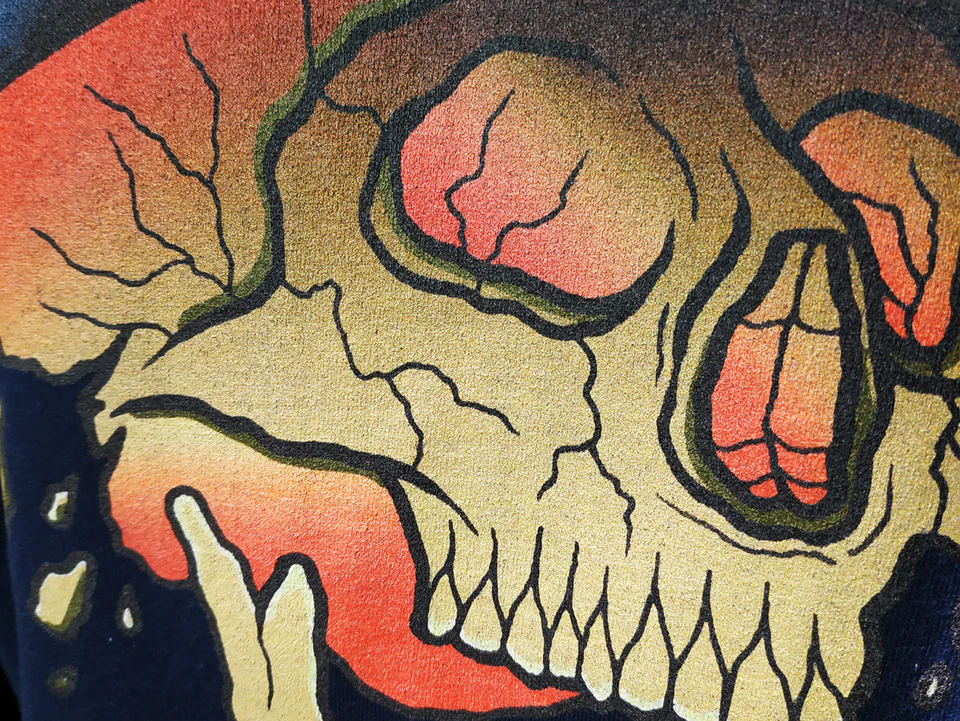
DTG prints directly onto a garment and is a form of digital printing. The garment is held in position, pretreated where needed, printed and cured. What to compare in the image The close-up shows multicolour detail and shading alongside the cloth texture. Compared with solid screen-printed graphics, fine artwork is the focus; white underbases on dark fabric can affect hand-feel. Properties and limitations Cotton and some cotton blends are common substrates. Suitability depends on printer, ink and fabric finish; assess pretreatment marks, colour and wash results. External visual reference, not a factory sample. Image source: PUR Digital .
ApplicableDetailsDetailed illustrations and photographic graphics on cotton-rich tees
Embroidery
3Graphics formed with stitches: compare flat thread surfaces, foam-backed relief and chenille loops.
- Embroidery
Flat embroidery
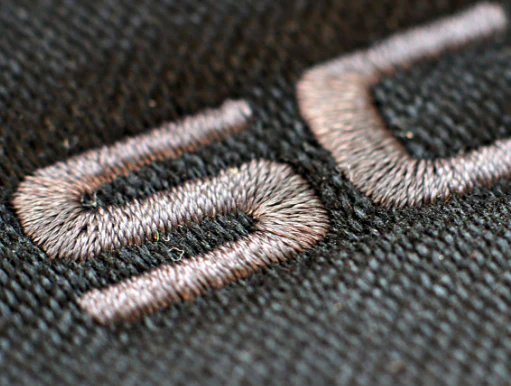
Thread follows a stitch path to form outlines or filled shapes on cloth. Satin stitches create continuous sheen, while fill stitches show directional texture. What to compare in the image Individual threads and turning points are visible. Unlike foam-backed 3D embroidery, flat embroidery has no added foam height; compared with chenille its surface is tighter and its contours finer. Properties and limitations Small lettering and dense fills require suitable thread, stitch density and backing. Check puckering and reverse-side comfort on thin or stretchy materials. External visual reference, not a factory sample. Image source: Custom Ink .
ApplicableDetailsLogos and line artwork on polos, shirts, sweatshirts and caps
 Embroidery
3D puff embroidery
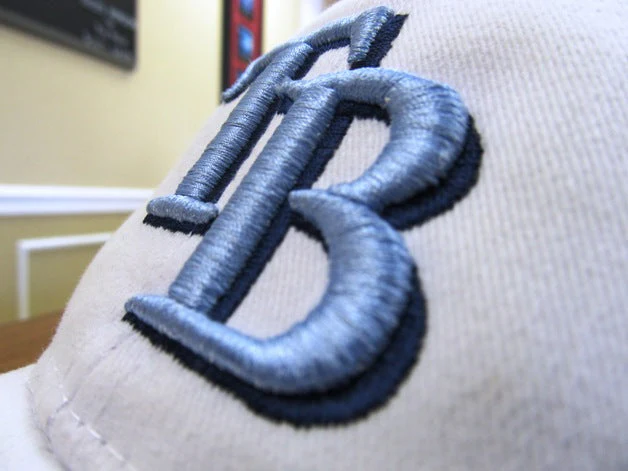
Foam is commonly placed beneath the stitching and covered with thread to create raised letters or contours. What to compare in the image The angled example shows height, edge shadows and dense stitches. Puff print also creates relief, but 3D embroidery has a threaded surface; compared with flat embroidery the outline is thicker. Properties and limitations Broad strokes and enclosed shapes are useful starting points. Check exposed foam, end coverage and fabric support; small flat-embroidery lettering cannot always be reused unchanged. External visual reference, not a factory sample. Image source: ColDesi .
ApplicableDetailsRaised letters and simple emblems on caps and substantial garments
 Embroidery
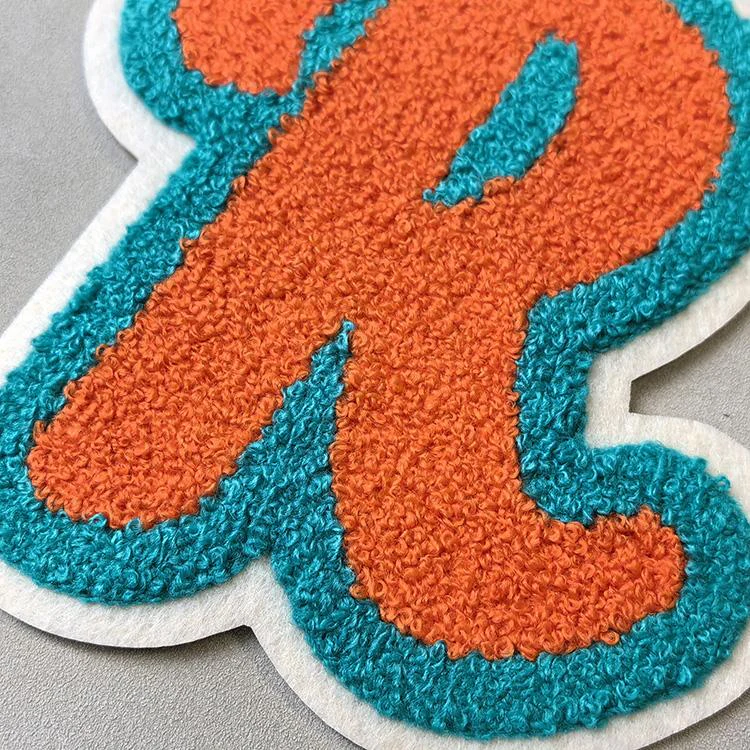
Chenille embroidery
Looped or pile-like stitches create a plush surface, often combined with felt, borders or other stitches to form letter patches. What to compare in the image The reference shows overlapping loops with a towel-like texture. Compared with the aligned stitches of flat embroidery and the dense covering of 3D embroidery, chenille emphasises pile and volume. Properties and limitations Large letters and simple blocks are useful applications. Loops can obscure tiny text or fine lines; check loop security, borders and the patch attachment method. External visual reference, not a factory sample. Image source: Winslabel .
ApplicableDetailsLetter patches and decorative emblems on varsity jackets and sweatshirts
Washing
3Finishing changes shade, surface and feel: distinguish mechanical abrasion, enzyme action and softened effects.
- Washing
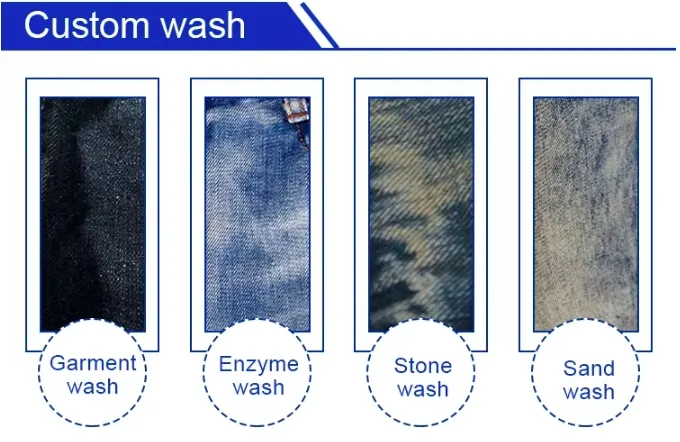
Stone wash
Traditional stone washing uses mechanical abrasion from pumice or other media to alter a garment surface and shade, particularly for worn denim effects. What to compare in the image The Stone wash panel shows mottled light and dark areas. Compared with enzyme washing, mechanical abrasion is the defining mechanism; fabric and process settings change the result. Properties and limitations Check seams, edges, strength and finished dimensions. These are separate reference samples, not a controlled trial on identical cloth; they do not define a fixed fading level. External visual reference, not a factory sample. Image source: Tagzone .
ApplicableDetailsWorn finishes on denim trousers and jackets
- Washing
Enzyme wash
Enzymes selected for the fibre modify its surface. Cellulase is commonly used for cotton surface cleaning and denim abrasion; the enzyme must suit the material. What to compare in the image The Enzyme wash panel provides a shade and surface reference. Unlike mechanical stone abrasion, enzymes act through biocatalysis; production processes may combine both approaches. Properties and limitations Enzyme type, temperature, treatment time and deactivation affect results. Compare surface fuzz, strength, shade and dimensions rather than colour alone. External visual reference, not a factory sample. Image source: Tagzone .
ApplicableDetailsCompatible cotton-rich knits and denim finishing
- Washing
Sand wash
Sand wash is a finishing term used for softened, matte or subtly peached effects. The actual treatment depends on fibre and the intended hand-feel and must be specified. What to compare in the image The Sand wash panel is a light surface reference. Compared with stone abrasion or enzyme treatment, assess the intended softness and surface character rather than assuming a single recipe. Properties and limitations Sand washing is not the same as dry sandblasting. A photograph cannot establish the treatment or hand-feel; compare physical samples for surface, drape, shade and dimensional change. External visual reference, not a factory sample. Image source: Tagzone .
ApplicableDetailsCompatible fabrics requiring a softened, matte finish
Approve the finish on the actual material
Printing, embroidery and washing interact with the garment fabric. Compare motif size, placement, colour, surface feel and the reverse side, rather than choosing from a close-up image alone.
- Provide editable artwork, dimensions, placement and colour references.
- Confirm fabric composition, stretch and the intended wash-care instructions.
- Agree checks for appearance, adhesion, distortion or colourfastness where relevant.
Images on reference pages illustrate visible effects and are credited where applicable. Confirm the process through a sample before production. Review material choices and inspection requirements, then share your artwork and garment brief.