

Compare garment finishes
Compare ink layers, raised surfaces, stitches, pile and washed textures, with the mechanism and limitations of each technique.
Washing
3Finishing changes shade, surface and feel: distinguish mechanical abrasion, enzyme action and softened effects.
- Washing
Stone wash
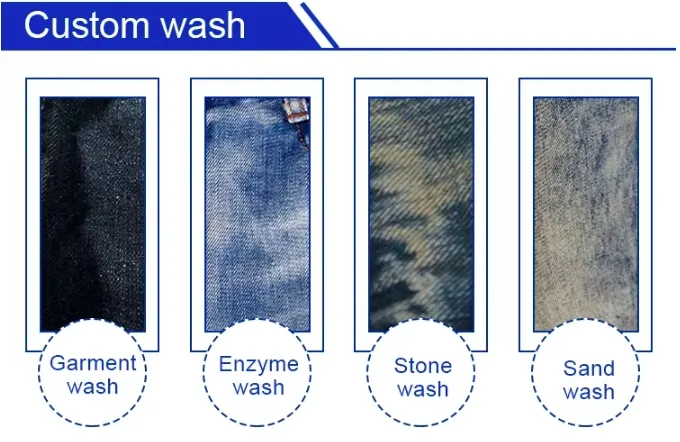
Traditional stone washing uses mechanical abrasion from pumice or other media to alter a garment surface and shade, particularly for worn denim effects. What to compare in the image The Stone wash panel shows mottled light and dark areas. Compared with enzyme washing, mechanical abrasion is the defining mechanism; fabric and process settings change the result. Properties and limitations Check seams, edges, strength and finished dimensions. These are separate reference samples, not a controlled trial on identical cloth; they do not define a fixed fading level. External visual reference, not a factory sample. Image source: Tagzone .
ApplicableDetailsWorn finishes on denim trousers and jackets
- Washing
Enzyme wash
Enzymes selected for the fibre modify its surface. Cellulase is commonly used for cotton surface cleaning and denim abrasion; the enzyme must suit the material. What to compare in the image The Enzyme wash panel provides a shade and surface reference. Unlike mechanical stone abrasion, enzymes act through biocatalysis; production processes may combine both approaches. Properties and limitations Enzyme type, temperature, treatment time and deactivation affect results. Compare surface fuzz, strength, shade and dimensions rather than colour alone. External visual reference, not a factory sample. Image source: Tagzone .
ApplicableDetailsCompatible cotton-rich knits and denim finishing
- Washing
Sand wash
Sand wash is a finishing term used for softened, matte or subtly peached effects. The actual treatment depends on fibre and the intended hand-feel and must be specified. What to compare in the image The Sand wash panel is a light surface reference. Compared with stone abrasion or enzyme treatment, assess the intended softness and surface character rather than assuming a single recipe. Properties and limitations Sand washing is not the same as dry sandblasting. A photograph cannot establish the treatment or hand-feel; compare physical samples for surface, drape, shade and dimensional change. External visual reference, not a factory sample. Image source: Tagzone .
ApplicableDetailsCompatible fabrics requiring a softened, matte finish